- By María Antonia Lossada
For Wifredo Lam (1902–1982), freedom in painting was not merely a technical or formal matter, but a deep stance toward life, art, and history. When Lam referred to Pablo Picasso (1881–1973) as an “instigator of freedom,” he wasn’t just speaking of an artist who revolutionized form and broke with tradition—he was speaking of a mentor who sparked in him the desire to explore his identity and heritage in an essential way. The freedom Picasso offered led him, on one hand, to reconnect with his Cuban imagination—his Afro-Caribbean roots, Cuban religious syncretism, and the ancestral rhythm of Yoruba spirituality—and on the other, to reaffirm his commitment to social justice.
Lam’s journey had begun years before meeting Picasso, in Spain, navigating between tradition and avant-garde, moving through the legacy of the old Spanish masters and the modernists. His deep fascination with Hieronymus Bosch is evident in the complex symbolism and intricate detail of his compositions, and the geometry of Juan Gris—absorbed and recontextualized throughout his work. From that period also came his admiration for Paul Cézanne, “the Father of us all” (as Picasso called him, referring to the generation of modernist artists), the exoticism in Gauguin’s work that encouraged Lam to explore non-Western cultures, and his curiosity about the bold palette of Henri Matisse.
Lam, who admired Matisse’s radically free use of color and form, found in his work a profound resonance with his own search. In The Window I (1935), through a blue chromatic filter, Lam presents an intimate scene infused with the rich decorative patterns of colonial Cuban homes. In the foreground, a table with a vase of white flowers establishes a dialogue with the outside world, where the neighboring houses and a church—symbolic of religious tradition—are visible. In this way, Lam creates a conversation between interior and exterior. Similarly themed and painted in greenish tones, Matisse’s The Window (1916) invites us into a furnished interior space. Alongside the familiar table and vase of flowers, we see a window looking out onto a tree. With the clean lines he explored throughout his career, this work by Matisse echoes his sentiment: “Windows have always interested me because they are a passage between the interior and the exterior.” In both paintings, the window acts as a regulating element, a balance between the intimate and the public, suggesting the feeling of freedom that can be experienced from within.
In La Table Blanche (1939), restrained in color and simplified in detail, Lam, like Cézanne in his many still lifes, emphasizes the freedom to observe from multiple planes—a view of everyday objects placed on a simple table. This painting, through its omission of detail, serves as a study in color, form, and multiple perspectives, and as a tribute to the “Father” of Modern Art. The knife on the table feels unsettling and invites the viewer to participate.
In France, Lam was captivated by the avant-garde scene. André Breton and the surrealist world helped him shed preconceived cultural burdens, allowing him to create dreamlike imagery and translate European surrealism into a visual language rich in Afro-Cuban symbols and everything the Caribbean climate allows to flourish. But it was undoubtedly his connection with Picasso that marked a turning point. African art, seen through Picasso’s lens, allowed Lam to redefine his own vision. Instead of glorifying the exotic or the “other,” Lam used African art as a vehicle to speak of his own roots, bringing to the forefront a visual tradition often overlooked by European modernism.
Picasso not only gave Lam new ways of seeing—his ideas about justice and social equality deeply influenced the young artist, who with great sensitivity and a strong sense of social responsibility, sought to reflect a democratic vision in which all people and cultures were equally valued. Lam’s work thus became a critical expression against colonialism and a tool for social change. It’s no surprise that, after his encounter with Picasso, his work reflected this inclusive vision.
That was the moment: Lam had grown wings to fly.
Two examples of how Lam manifested this freedom are The Green Morning (1943) and The Chair (1943), created a year after his return to Cuba in 1942. The Green Morning presents a hybrid female figure amid sugarcane stalks native to Cuba. The overlapping shapes evoke Picasso’s compositions, while the helmets, wings, and clustered heads are symbols drawn from Afro-Cuban religious and spiritual imagery. These are not mere decorative elements but beings charged with power and meaning. This freedom—borne of Picasso and surrealism—allowed Lam to transcend formal concerns and address colonial history and cultural resistance.
In The Chair (1943), a carved chair with a vase of foliage placed on the seat suggests an unconventional use, perhaps a rejection of hierarchy or absence of authority. It is a subversion of the established order. The lush landscape, along with the varying shades of green, evokes the Cuban jungle and Caribbean abundance, expressed through a universal language. The Chair challenges conventional perspective and realistic representation, acknowledging the innovations of modern European painting.
This dialogue between European modernism and non-Western traditions gives Lam’s work its unique character. Here, freedom is about reconciling and layering seemingly incongruent identities: that of the European modernist and the heir to a rich Afro-Caribbean cultural tradition.
For Wifredo Lam, freedom in painting was never just about style or technique—it was an act of resistance. Through his encounter with Picasso and his immersion in surrealism, Lam found a way to explore his Cuban identity and African roots in a context that often erased non-Western cultures. Picasso, for Lam, was an “instigator of freedom” because he opened the doors to modernism and showed that it was possible to shake dominant narratives and create a space for voices that had long been ignored. In his work, Lam invites us to a profound reflection on identity, history, and the freedom to be authentic.
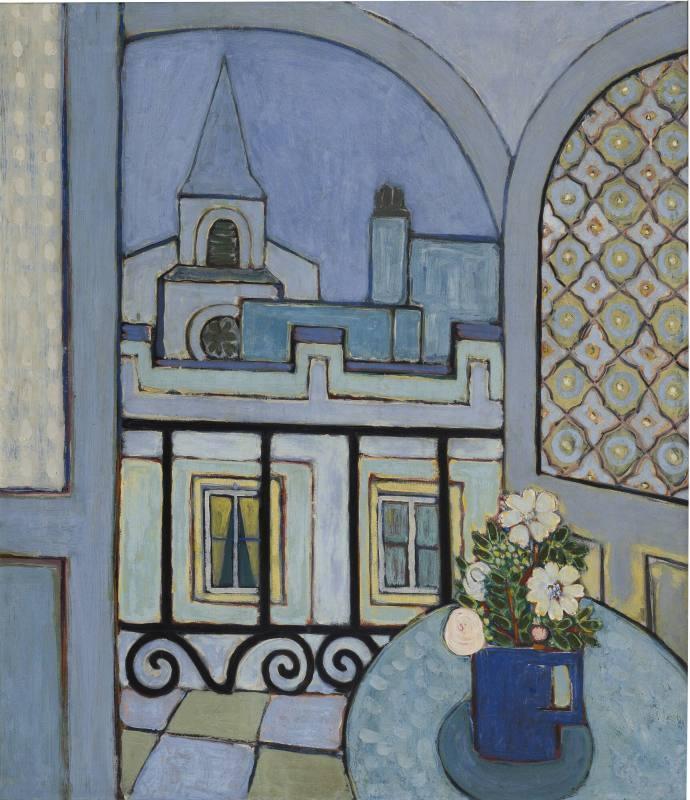
La Ventana I (The Window I), 1935
Wifredo Lam
Image by Pérez Art Museum Miami https://www.pamm.org/en/artwork
Copyright © 2022 Artists Rights Society (ARS), New York / ADAGP, Paris
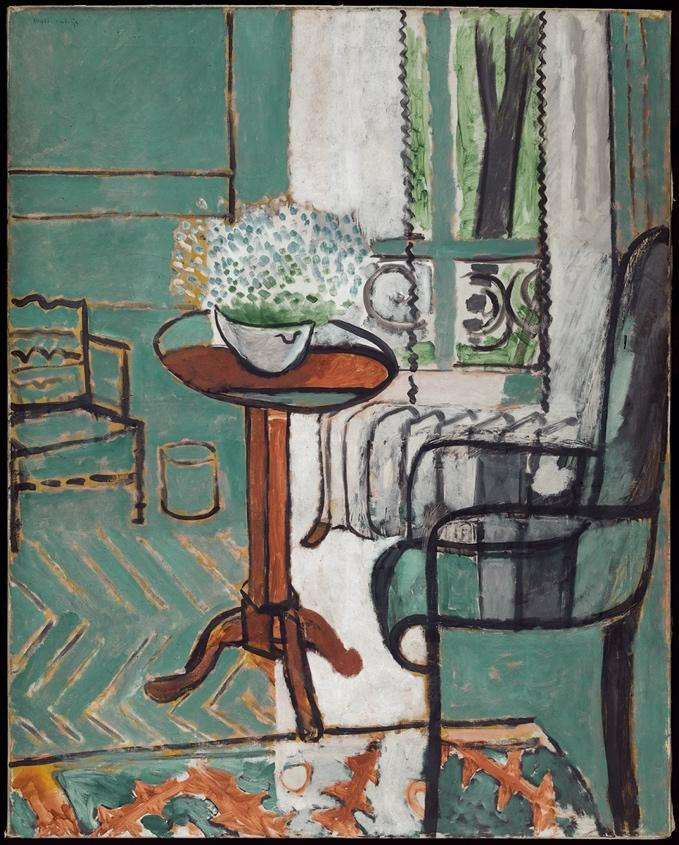
La Ventana (The Window), 1916
Henri Matisse
Oil on canvas, 146 × 117 cm
Image by Detroit Institute of Arts: https://dia.org/collection/window
Copyright Restricted
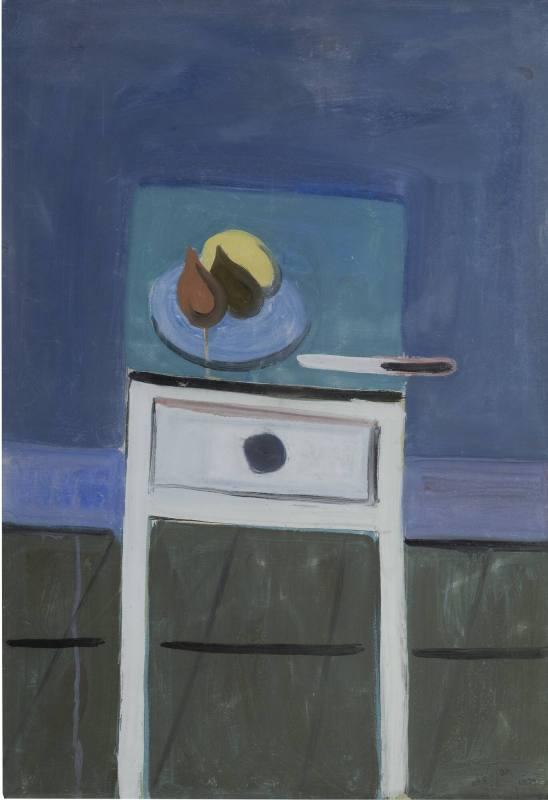
La Table Blanche (The White Table), 1939
Wifredo Lam
Image by Pérez Art Museum, Miami: https://www.pamm.org/en/artwork
Copyright
© 2022 Artists Rights Society (ARS), New York / ADAGP, Paris
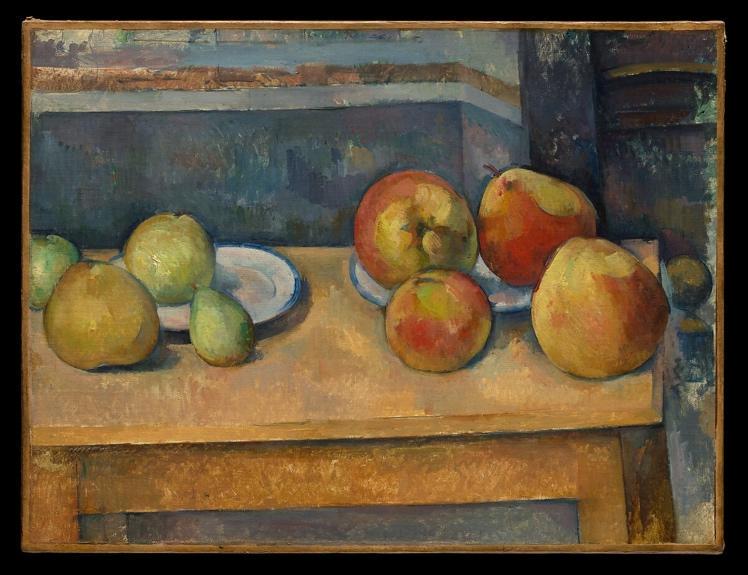
Still Life with Apples and Pears. 1891-92
Paul Cézanne
Oil on canvas, 45 x 59 cm
Image by Metropolitan Museum: https://www.metmuseum.org/art/
Public Domain
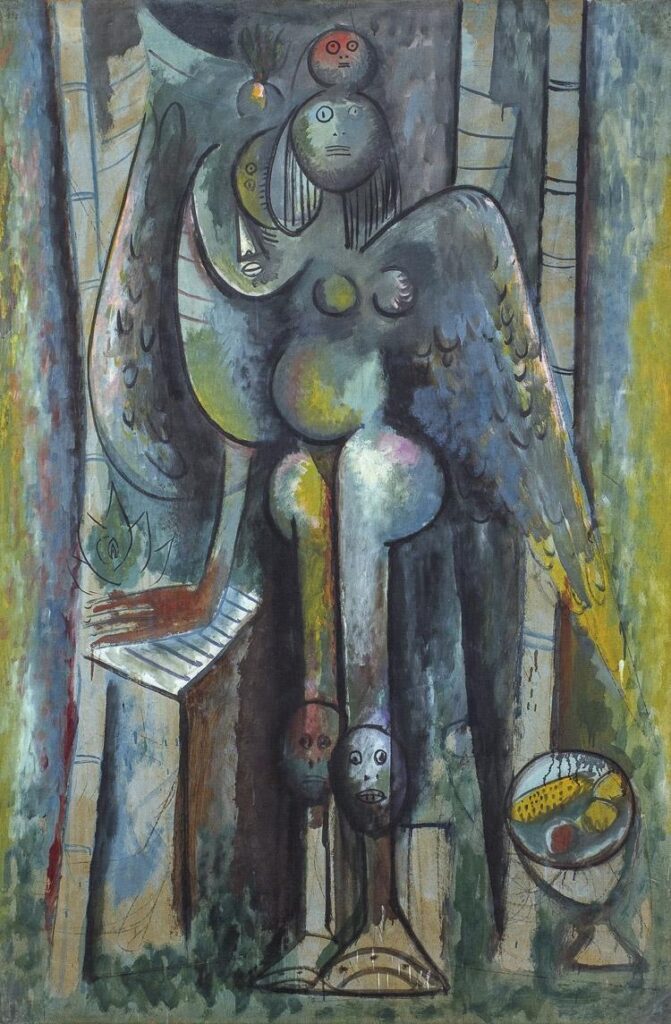
La Mañana Verde (The Green Morning), 1943
Oil on paper mounted on canvas., 187 x 124 cm
Image by Museo Malba, Buenos Aires: https://coleccion.malba.org.ar/la-manana-verde/
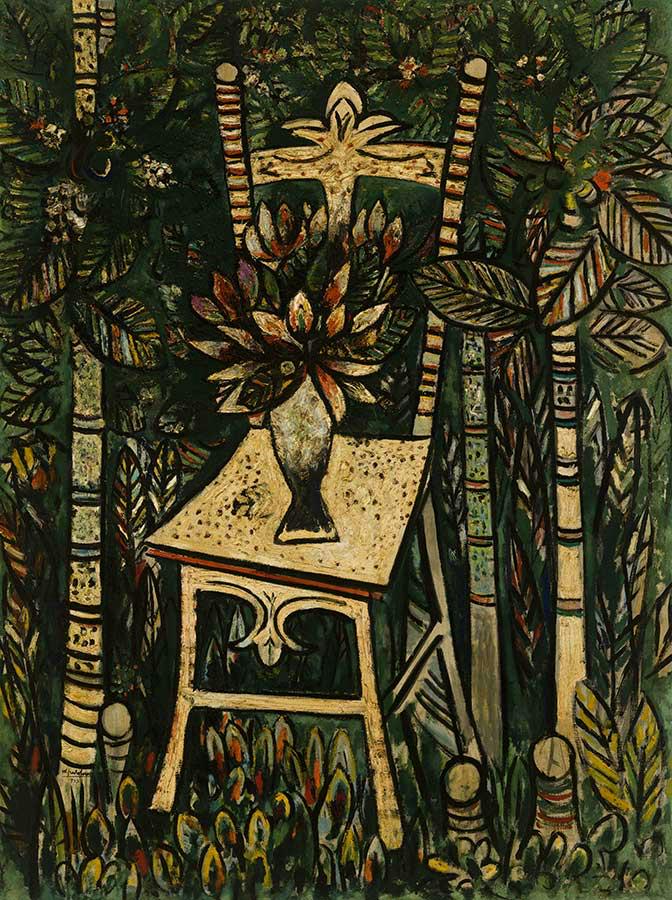
La Silla (The Chair), 1943
Oil on canvas, 131 x 97.5 cm
Image by Museo Nacional de Bellas Artes de Cuba: https://www.bellasartes.co.cu/obra/wifredo-lam-la-silla