- By Felix Suazo
There’s nothing more enjoyable than exploring the city with a curious eye. In Miami, where wheels are the primary means of transportation, this luxury is best appreciated in select areas. One of these exceptional spots is Downtown, where its narrow streets and older buildings contrast with the broad sidewalks lining Biscayne Boulevard.
Often called the “Gateway to Miami,” the construction of this prominent urban thoroughfare dates back to the 1920s. A pleasant surprise awaits the attentive passerby right at their feet, between the wall of towers and the bay: a vast carpet of concrete pavers designed by Brazilian artist and landscape architect Roberto Burle Marx (Brazil, 1909-1994).
Stretching from Southeast Second Street to Northeast 13th Street—from the Arsht Center to Chopin Plaza—this project was commissioned by Miami in 1988 and completed 16 years later, in 2004. The work features organic shapes that evoke the sea, sand, and vegetation, creating a symbolic bridge between the marine environment and the city that rises along its shores. The best views to appreciate Burle Marx’s full design on Biscayne Boulevard are aerial, but its effect is most penetrating and immersive when experienced up close on foot. However, one issue is the occasional presence of painted marks and signs, unrelated to the Brazilian master’s vision.
On that note, a January 2020 article published in Miami’s Nuevo Herald highlighted the damage impacting the boulevard’s design. “Painted markings of underground utility installations and new posts along Biscayne Boulevard have vandalized the artistic sidewalk commissioned by the renowned Brazilian architect Roberto Burle Marx,” journalist Linda Robertson reported.
Aside from this detail (fortunately, correctable with regulatory care), it’s delightful to find a piece of Miami’s artistic memory just a step away. Burle Marx’s work, like other projects of similar scale and meaning embedded within the city’s urban fabric, offers enduring symbols of rootedness in a city where everything changes rapidly.
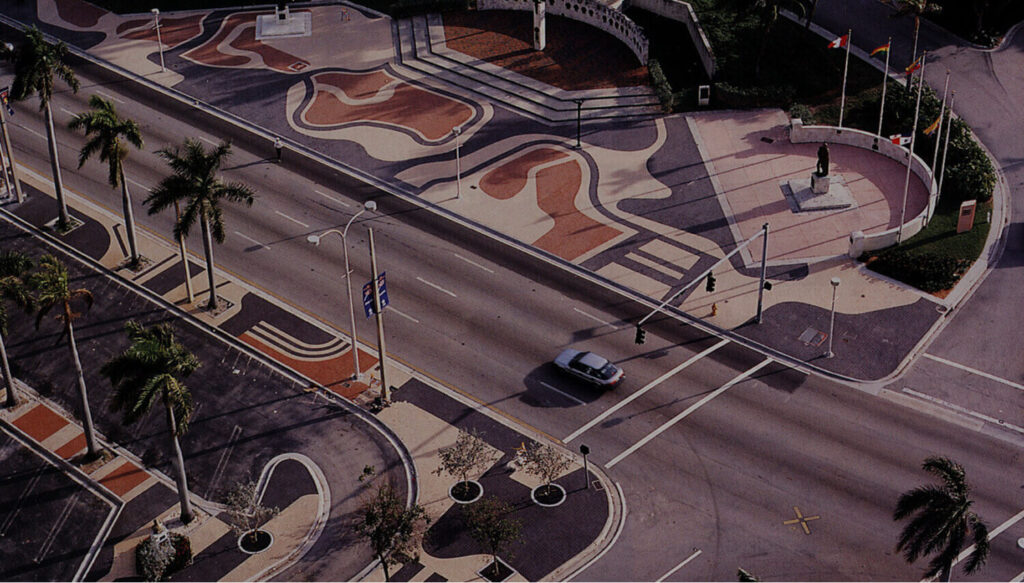
Roberto Burle Marx. Biscayne Boulevard, Miami, 1988-2004.
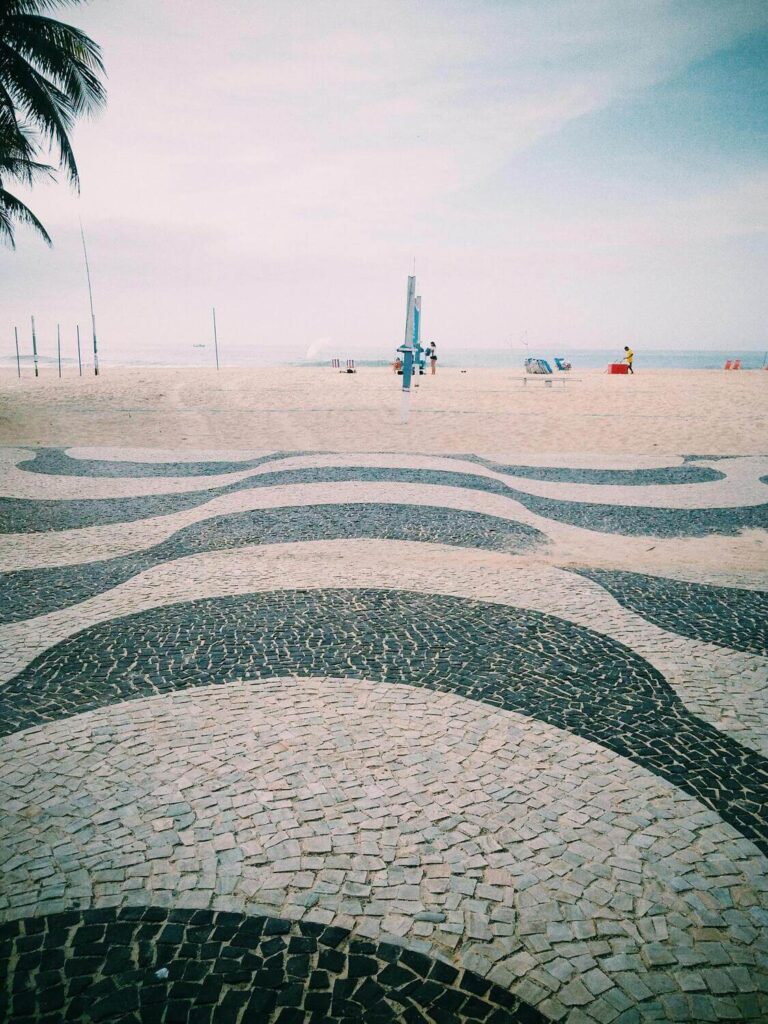
Roberto Burle Marx. Copacabana